



3D Scene Composition & Mesh Slot Abstractions
In 3D configurator development, hardcoding deep scene-graph paths (e.g. Scene.Root.Geometry002SubMesh) creates brittle code that breaks whenever 3D artists rename nodes or re-export GLTF files.
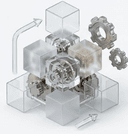
Aircada introduces the Mesh Slot Abstraction: 3D scene objects expose standardized, generic slot names (e.g. slotcasemesh, slotbezelmesh, slotdialmesh, slotbraceletmesh, slotcasebackmesh).
1. Dynamic Material Swapping Pipelines
Operators query designated mesh slots and apply PVD metal shaders, roughness maps, normal maps, and diffuse textures dynamically at runtime without reloading or re-instantiating GLTF models.
2. Geometry Replacement Anchors
For dimensional variants (e.g. 29mm vs 38mm watch case), parent transform anchors hold interchangeable geometry slots. The operator toggles visibility or swaps child buffers seamlessly.
3. Procedural Decal & Text Projection
Personalization features (such as laser monogram engraving) project procedural vector text onto designated mesh slots (slotcasebackmesh) along normal vectors without modifying source CAD geometry.
- Generic Slot Naming: Always use standardized slot*mesh identifiers instead of internal artist node paths.
- In-Place Material Swapping: Update PVD shader parameters dynamically at runtime to maintain 60fps performance without reloading assets.
- Interchangeable Geometry Anchors: Bind dimensional variant models to designated parent transform slots.
- Procedural Projection: Project custom laser engraving and monogram text along normal vectors onto slotcasebackmesh.